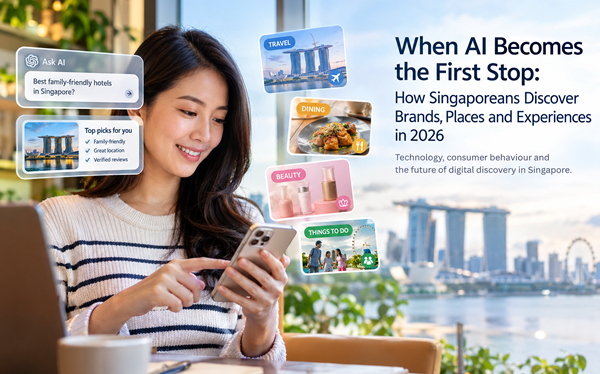
Technology, consumer behaviour and the future of digital discovery in Singapore
For years, discovering a new restaurant, choosing a hotel or researching a beauty product usually began with a search engine, a recommendation from a friend or a scroll through social media. In 2026, artificial intelligence (AI) is adding another route to that process: asking a conversational tool to compare options, explain differences and suggest what might suit a particular need.
The change is significant, but it is still evolving. AI has not replaced traditional search, social media or personal recommendations. Instead, it is becoming another way for consumers to gather information and narrow their choices, with implications for businesses and digital publishers alike.
From searching for links to asking for answers
Traditional search engines generally present users with a list of links, allowing them to visit websites and compare information themselves. Conversational AI tools can take a different approach by summarising information, responding to follow-up questions and organising suggestions around a user’s stated preferences.
For example, someone planning a family staycation might ask an AI assistant to compare hotels by location, transport connections, facilities for children and approximate cost. A person researching skincare might ask for an explanation of ingredients or a comparison of products designed for different needs.
These examples illustrate possible uses rather than proving that every Singaporean consumer behaves this way. The broader point is that digital discovery is expanding beyond a single search box or social platform.
Salesforce’s State of Commerce report, announced in Singapore on 30 September 2026, provides a current indication of this shift. According to the company’s survey of 3,450 commerce professionals worldwide, including 100 respondents from Singapore, the use of agentic search as the first step in a shopping journey grew by 200% year on year. The company also reported that 82% of surveyed Singapore commerce leaders agreed that large language models would be essential to product discovery within the following year.
These figures reflect reported industry findings, not a claim that 200% of consumers use AI or that most Singaporeans have abandoned conventional search. They nevertheless indicate why businesses are paying closer attention to how AI systems discover and present products.
Discovery is becoming a multi-channel process
AI is only one part of the changing discovery landscape. Search engines, social media, video, online reviews, brand websites, news coverage and recommendations from friends continue to play different roles.
A consumer might discover a new restaurant through a short video, check its location and menu through a search engine, read customer reviews and then ask an AI assistant to compare it with alternatives. Someone considering a hotel might encounter it through a travel article before checking the official website and recent guest feedback.
This is an illustrative journey, not a universal pattern. The order of these steps depends on the person, the decision and the information available.
For businesses, the implication is straightforward: being visible on one platform may not be enough. Potential customers can encounter information about a brand in several places before deciding whether to visit, book or buy.
The challenge is not simply to appear in more places. Information needs to be consistent and useful wherever it appears. Outdated opening hours, unclear pricing, incomplete product details or conflicting descriptions can make a business harder to evaluate, whether a customer is using a search engine or an AI assistant.
Why trust and verification still matter
AI-generated answers can be convenient, but a fluent response is not automatically an accurate one. AI systems may produce outdated, incomplete or incorrect information, and a recommendation can overlook an individual’s circumstances or preferences.
Consumers should therefore treat AI as a starting point rather than an unquestionable authority, especially when a decision involves substantial spending, important commitments or claims that need verification.
For a hotel, that means checking the official website for room details, current rates, cancellation terms and included facilities. For a restaurant, it means confirming opening hours, menu information and booking arrangements directly where necessary. For skincare products, consumers should consult reliable product information and avoid treating general AI-generated suggestions as personalised medical advice.
The same principle applies to businesses. Accurate descriptions, transparent policies, accessible contact information and genuine customer feedback help people assess what is being offered. These are useful practices regardless of whether a customer arrives through traditional search, social media or an AI-generated recommendation.
Trust cannot be established by optimising content alone. It also depends on whether the actual service or product delivers what has been promised.
What this means for brands and marketers
As AI tools become another route through which people seek information, businesses have reason to review how they present their products and services online.
Salesforce’s September 2026 findings suggest that some Singapore commerce organisations are already responding. Among the measures reported in the survey were improving product-content quality, adapting content to conversational queries and preparing product data for AI search platforms.
For businesses, practical priorities include:
- Provide clear, accurate information. Product specifications, prices, availability, location details, policies and frequently asked questions should be easy to understand and regularly reviewed.
- Maintain a reliable official source. A well-maintained website gives customers and other information services a place to verify important details.
- Use natural language. Content that directly answers genuine customer questions can be useful to both human readers and systems that interpret conversational queries.
- Build credibility beyond the brand’s own channels. Independent reporting, authentic customer reviews and relevant third-party references can help audiences assess a business more confidently.
- Measure more than visibility. Website visits, enquiries, bookings, purchases and customer retention can provide a fuller picture of whether marketing efforts are delivering results.
These measures do not guarantee that a business will appear in an AI-generated answer. The way different systems select, rank and present information varies, and their methods can change. Businesses should be wary of anyone promising guaranteed AI recommendations or instant visibility through a single optimisation technique.
Traditional search engine optimisation also remains relevant. AI discovery and conventional search overlap, but they are not identical. A sound digital strategy should respond to the audiences and channels that matter to a business rather than treating one new technology as a replacement for everything that came before.
The implications for digital publishers
The shift matters not only to brands but also to websites that produce articles, guides, reviews and original reporting.
The Reuters Institute for the Study of Journalism’s Digital News Report 2026, published on 16 June 2026, found that 11% of surveyed respondents in Singapore accessed news through AI chatbots. Online news and social media remained much more common routes to news, at 87% and 59% respectively.
The report also found that 10% of respondents across 48 markets used AI chatbots for news each week, up from 7% the previous year. Only 1% said AI was their main source of news. These figures concern news consumption specifically, not all uses of AI or the discovery of commercial products.
The findings suggest that AI is entering the information landscape, but should not be interpreted as evidence that it has already become the dominant source of information. Established news brands, websites and social platforms remain important.
For digital publishers, one concern is that AI-generated summaries may satisfy some readers’ questions without prompting them to visit the original article. The Reuters Institute’s research discusses this as a developing issue for publishers, while also noting that people may click through to verify information or learn more about its source.
This creates a reason for publishers to strengthen what makes their work distinctive. Original interviews, first-hand reporting, carefully verified facts, specialist knowledge and a clear editorial perspective are harder to replace with generic summaries than content that simply repeats widely available information.
Publishers should also make their articles easy to understand, accurately titled and properly sourced. Clear headings and useful explanations help readers navigate a page, while transparent sourcing allows them to evaluate the evidence behind a claim.
No single tactic guarantees referral traffic from AI systems. The more durable objective is to publish work that readers find worth seeking out, trusting and returning to.
Why the human element still matters
Not every decision is a purely rational comparison of price, location or specifications. People also value atmosphere, personal taste, familiarity, convenience and the experiences they expect to enjoy.
A family choosing a weekend activity may care about whether everyone can participate. A diner may be drawn to a restaurant’s ambience and hospitality. A traveller may prefer a hotel because of its service or the memories associated with a previous stay.
AI can help organise information and compare stated requirements, but it cannot guarantee that a recommendation will match someone’s lived experience. Nor does a personalised-sounding answer necessarily mean that a system fully understands an individual’s priorities.
This is why human judgement remains important. First-hand experiences, conversations with people whose preferences are understood and direct checks with a service provider can add context that a general recommendation may miss.
For brands, the lesson is not to choose between technology and human connection. It is to use digital tools to make accurate information easier to find while ensuring that the real-world experience lives up to expectations.
What Singapore businesses should take away
The emergence of AI-assisted discovery presents both an opportunity and a challenge. Businesses may gain another way to reach people who are actively comparing options, but they also face greater pressure to keep information accurate, consistent and credible.
For smaller businesses and independent publishers, the response does not need to begin with expensive technology. Maintaining an up-to-date website, publishing useful original content, answering common customer questions and checking factual claims are practical foundations.
It is also worth monitoring how customers actually find and evaluate a business. Website analytics, customer enquiries and feedback can reveal which channels are producing meaningful engagement, rather than simply attracting attention.
Most importantly, decisions should be based on evidence rather than assumptions that every consumer is already using AI or that traditional search is disappearing.
A new route to discovery, not the end of the old ones
In 2026, AI is becoming a more visible part of how people seek explanations, compare choices and explore possibilities. Recent industry research points to growing interest in AI-assisted product discovery, while Singapore’s news-consumption data show that AI chatbots remain one of several ways people access information.
The direction of travel is worth watching, but the outcome is not predetermined. Search engines, social media, independent websites, professional expertise and personal recommendations all continue to have a role.
For consumers, the most useful approach is to treat AI as a research assistant, verify important details and make the final decision using sound judgement. For businesses, the priority is to provide reliable information, earn trust and maintain a strong presence across the channels their audiences use.
And for digital publishers, the opportunity is to deliver something more valuable than a generic answer: original insight, credible reporting and a distinctive point of view.
AI may change where discovery begins. What ultimately earns attention and trust is still the quality of the information—and the experience behind it.
******
当人工智能成为发现信息的第一站:2026年新加坡人如何发现品牌、地点与体验
科技、消费者行为与新加坡数字信息发现方式的未来
多年来,当人们想寻找一家新餐厅、选择一家酒店或了解一款护肤产品时,通常会先使用搜索引擎、向朋友征求意见,或浏览社交媒体。到了2026年,人工智能(AI)为这一过程增加了另一种途径:通过对话式工具提出问题、比较不同选项、了解产品之间的差异,并寻找符合个人需求的建议。
这一变化值得关注,但仍处于发展阶段。人工智能尚未取代传统搜索引擎、社交媒体或个人推荐。相反,它正逐渐成为消费者搜集信息、缩小选择范围的另一种方式,同时也为企业和数字媒体出版商带来新的影响。
从搜索网页链接到直接获取答案
传统搜索引擎通常会向用户呈现一系列网页链接,让用户自行访问网站并比较相关信息。对话式人工智能工具则可以采用不同的方式,例如总结资料、回答后续问题,以及根据用户表达的偏好整理建议。
例如,计划家庭度假的人可能会要求AI助手比较不同酒店的地理位置、交通连接、儿童设施和大致费用。研究护肤产品的人,则可能询问某些成分的作用,或比较针对不同需求设计的产品。
这些例子说明了人工智能可能如何被使用,但并不代表每一位新加坡消费者都会采用这种方式。更重要的是,数字信息发现的途径正在扩展,不再局限于单一搜索框或社交平台。
Salesforce于2026年9月30日在新加坡公布的《商业现状报告》(State of Commerce),为这一变化提供了近期的行业参考。根据该公司对全球3,450名商业从业者进行的调查,其中包括100名来自新加坡的受访者,以智能体人工智能(Agentic AI)为基础的搜索,在购物旅程中作为第一步的使用量同比增长了200%。该公司还报告称,82%的受访新加坡商业领域负责人认为,大型语言模型将在未来一年内成为产品发现的重要工具。
这些数字反映的是行业调查结果,并不意味着200%的消费者正在使用人工智能,也不代表大多数新加坡人已经放弃传统搜索。尽管如此,这些数据说明了企业为何越来越重视人工智能系统如何发现并呈现产品。
信息发现正逐渐成为多渠道的过程
人工智能只是不断变化的信息发现环境中的一部分。搜索引擎、社交媒体、视频、网上评价、品牌官方网站、新闻报道,以及朋友的推荐,仍然各自发挥着不同的作用。
消费者可能先通过短视频发现一家新餐厅,再使用搜索引擎查询地址和菜单、阅读顾客评价,最后询问AI助手,将这家餐厅与其他选择进行比较。考虑预订酒店的人,也可能先在旅游文章中看到相关介绍,随后查看酒店官方网站和近期住客的评价。
这是一种用于说明情况的消费路径,并非所有人都会遵循的固定模式。实际步骤及其顺序,会因个人、决策类型和可获得的信息而有所不同。
对企业而言,这意味着仅仅在一个平台上获得曝光,可能已经不够。潜在顾客在决定是否到访、预订或购买之前,可能会在多个渠道接触同一个品牌的信息。
挑战不仅在于增加曝光渠道,更在于确保不同渠道所呈现的信息一致且实用。过时的营业时间、不明确的价格、不完整的产品资料,或互相矛盾的描述,都会增加消费者评估一家企业的难度,无论他们使用的是传统搜索引擎还是AI助手。
为什么信任与核实仍然重要
人工智能生成的答案虽然方便,但表达流畅并不代表内容一定准确。AI系统可能提供过时、不完整或错误的信息,其推荐也可能忽略个人的实际情况或偏好。
因此,消费者应将人工智能视为搜集信息的起点,而不是绝对可靠的权威。尤其当决定涉及较大金额、重要承诺,或需要核实的具体说法时,更应谨慎判断。
以酒店为例,消费者应查看官方网站,核实客房详情、当前房价、取消条款及包含的设施。选择餐厅时,必要时应直接确认营业时间、菜单信息和订位安排。对于护肤产品,消费者应参考可靠的产品资料,不应将AI生成的一般性建议当作针对个人情况的医疗意见。
同样的原则也适用于企业。准确的产品描述、透明的政策、方便查询的联络资料,以及真实的顾客反馈,都有助于消费者判断企业实际提供的产品或服务。无论顾客是通过传统搜索、社交媒体,还是AI生成的推荐找到企业,这些做法都具有价值。
信任并不能仅靠优化内容建立,也取决于实际产品或服务是否兑现承诺。
这对品牌与营销人员意味着什么?
随着人工智能成为人们获取信息的另一种途径,企业有必要重新审视自己如何在网上介绍产品与服务。
Salesforce于2026年9月公布的调查结果显示,部分新加坡商业机构已经开始作出调整。调查所涉及的措施包括提升产品内容的质量、针对对话式查询调整内容,以及为AI搜索平台准备产品数据。
对企业而言,实际可采取的措施包括:
- 提供清晰、准确的信息。 产品规格、价格、供应情况、地点、相关政策和常见问题,都应易于理解并定期检查更新。
- 维护可靠的官方信息来源。 一个持续更新的网站,可以让顾客及其他信息服务核实重要资料。
- 采用自然、易懂的语言。 直接回答顾客真实问题的内容,对人类读者和需要理解对话式查询的系统都可能有帮助。
- 在品牌自有渠道以外建立公信力。 独立报道、真实的顾客评价,以及相关第三方资料,有助于消费者更有信心地评估一家企业。
- 衡量不只是曝光的指标。 网站访问量、顾客咨询、预订、购买和客户留存情况,可以更全面地反映营销活动是否取得实际成效。
这些措施并不能保证企业一定会出现在AI生成的答案中。不同系统选择、排序和呈现信息的方式各不相同,而且相关机制可能持续变化。对于任何承诺保证AI推荐或只需采用单一优化技巧便能迅速提高曝光的说法,企业都应保持谨慎。
传统搜索引擎优化(SEO)同样仍然重要。AI信息发现与传统搜索存在重叠,但两者并不完全相同。稳健的数字营销策略应根据企业真正需要接触的受众和渠道来制定,而不是将一种新技术视为取代所有既有方式的工具。
对数字媒体出版商的影响
这项变化不仅与品牌有关,也会影响制作文章、指南、评测和原创报道的网站。
牛津大学路透新闻研究所(Reuters Institute for the Study of Journalism)于2026年6月16日发布的《2026年数字新闻报告》(Digital News Report 2026)发现,在新加坡受访者中,11%的人通过AI聊天机器人获取新闻。相比之下,网络新闻和社交媒体仍然是更普遍的新闻获取途径,比例分别为87%和59%。
该报告还发现,在所调查的48个市场中,每周使用AI聊天机器人获取新闻的受访者比例为10%,高于前一年的7%。只有1%的受访者表示,人工智能是他们的主要新闻来源。这些数字针对的是新闻消费,并不涵盖人工智能的所有用途,也不专门反映消费者发现商业产品的方式。
这些发现说明,人工智能正逐渐进入信息传播环境,但不能据此认定它已经成为主要的信息来源。传统新闻品牌、网站和社交平台仍然发挥着重要作用。
对于数字媒体出版商而言,一个值得关注的问题是,AI生成的摘要可能已经满足部分读者的需求,使他们不再进一步访问原始文章。路透新闻研究所的研究将此视为出版商面临的一个新兴问题,同时也指出,人们可能会点击原始来源,以核实信息或进一步了解资料的出处。
因此,出版商有必要强化自身内容的独特价值。原创访谈、第一手报道、经过仔细核实的事实、专业知识,以及鲜明的编辑观点,相较于单纯重复广泛可获得的信息,更难被一般性的内容摘要取代。
出版商也应确保文章易于理解、标题准确,并妥善注明资料来源。清晰的标题层级和实用的解释有助于读者浏览文章,而透明的资料来源则让读者能够评估相关论点所依据的证据。
没有任何单一做法能够保证文章获得来自AI系统的引流。更长远的目标,是持续发布值得读者主动寻找、信任并再次阅读的内容。
为什么人的因素依然重要
并非所有决定都只是对价格、地点或产品规格进行理性比较。人们也重视氛围、个人品味、熟悉感、便利性,以及对某种体验的期待。
一家人选择周末活动时,可能会考虑所有家庭成员是否都能参与。食客可能因为餐厅的氛围和服务而受到吸引。旅客则可能因为酒店的服务质量,或过去入住时留下的美好回忆,而再次选择同一家酒店。
人工智能可以协助整理资料,并比较用户明确提出的条件,但无法保证每一项推荐都符合个人的实际体验。一个听起来十分个性化的答案,也不一定意味着系统真正理解了某个人最重视的事情。
因此,人类的判断仍然不可或缺。亲身体验、向了解自己偏好的人征求意见,以及直接向服务提供者核实资料,都能补充一般性推荐可能遗漏的背景信息。
对品牌而言,重点并不是在科技与人与人之间的联系中二选一,而是利用数字工具让准确的信息更容易被找到,同时确保实际提供的体验符合消费者的期待。
新加坡企业应该从中得到什么启示?
AI辅助信息发现的兴起,既带来了机遇,也带来了挑战。企业可能因此多出一个接触正在比较不同选择的消费者的渠道,但同时也面临更高的要求,必须确保信息准确、一致且可信。
对于小型企业和独立媒体出版商而言,采取行动不一定需要从昂贵的技术投资开始。维护最新的网站资料、发布有价值的原创内容、回答顾客常见的问题,以及核实事实,都是切实可行的基础工作。
企业也应持续观察顾客实际上如何找到并评估自己的产品或服务。网站分析数据、顾客咨询和反馈,可以帮助企业了解哪些渠道带来了有意义的互动,而不只是短暂的关注。
最重要的是,企业应根据证据作出判断,而不是假设每位消费者都已经使用AI,或传统搜索即将消失。
信息发现的新途径,而非旧方式的终结
到了2026年,人工智能正逐渐成为人们寻求解释、比较选择和探索不同可能性的另一种重要工具。近期行业研究显示,市场对AI辅助产品发现的关注正在增加;与此同时,新加坡的新闻消费数据也表明,AI聊天机器人仍然只是人们获取信息的多种途径之一。
这一发展方向值得持续观察,但未来的结果尚未确定。搜索引擎、社交媒体、独立网站、专业人士的意见,以及个人推荐,依然各有其作用。
对消费者而言,最实用的做法是将人工智能视为研究辅助工具,核实重要资料,并运用合理判断作出最终决定。对企业而言,首要任务是提供可靠的信息、建立信任,并在目标受众使用的渠道中保持良好的曝光与可见度。
对于数字媒体出版商来说,真正的机会在于提供比一般性答案更有价值的内容:原创见解、可信的报道,以及具有鲜明特色的观点。
人工智能可能改变人们从哪里开始寻找信息,但最终赢得关注与信任的,依然是信息本身的质量,以及信息背后所代表的真实体验。





Leave a Reply