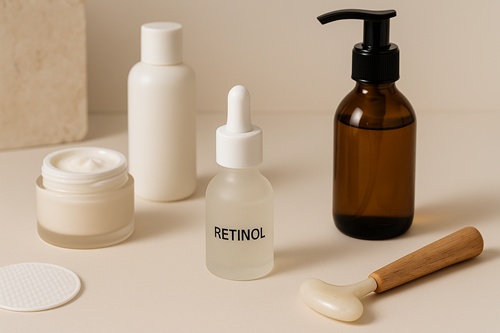
We all know that a good night’s sleep is essential for glowing skin, but what you apply to your face before bedtime is just as crucial. While daytime skincare focuses on protection think SPF, antioxidants, and pollution defense, nighttime is when your skin gets to repair, renew, and restore itself. This makes it the perfect window for using targeted ingredients that work best while you’re sleeping.
But with an ever-growing list of trendy ingredients such as retinol, peptides, acids, and plant-based alternatives, figuring out what’s actually effective (and safe) can feel overwhelming. Here’s your beginner-friendly guide to nighttime actives, and how to build a routine that supports long-term skin health.
Why Nighttime Is Prime Time for Actives
Your skin follows a circadian rhythm, meaning its behavior changes between day and night. At night, several biological changes take place:
- Cell regeneration accelerates
- Skin becomes more permeable, making it more receptive to topicals
- Melatonin and growth hormones spike, aiding skin repair
- Blood flow increases, helping nutrients reach the skin’s surface
In short, what you apply before bed can penetrate more deeply and work more effectively than during the day. But that also means your skin may be more sensitive, so selecting the right actives (and using them in moderation) is key.
Meet the Power Players
1. Retinol (Vitamin A Derivative)
Often considered the gold standard of anti-aging skincare, retinol is known for its ability to speed up cell turnover, stimulate collagen production, and reduce fine lines and acne. Beginners should start with a low concentration (like 0.1% or 0.3%) just two to three nights a week.
Tips:
- Always apply on dry skin after cleansing.
- Use a gentle moisturizer to buffer the effects.
- Introduce slowly to avoid flaking and irritation.
2. Bakuchiol (Plant-Based Alternative)
For those with sensitive skin or anyone seeking a natural option bakuchiol offers similar benefits to retinol without the dryness or peeling. It works on fine lines, uneven texture, and pigmentation while being gentler and generally non-irritating.
Use it like you would a serum or lightweight treatment cream, and you won’t need to build tolerance the same way as with retinol.
3. Niacinamide (Vitamin B3)
A versatile ingredient that suits nearly every skin type. Niacinamide helps reduce redness, control oil production, strengthen the skin barrier, and improve overall tone and texture. It pairs well with almost everything, including acids and retinoids, making it a must-have in any routine.
4. Peptides
These are short chains of amino acids that tell your skin to produce more collagen and elastin. Over time, peptides can lead to firmer, more elastic skin and support barrier repair. They work well layered under moisturisers and are ideal for more mature skin.
5. Exfoliating Acids (AHAs & BHAs)
Alpha Hydroxy Acids (like glycolic or lactic acid) and Beta Hydroxy Acids (like salicylic acid) gently exfoliate the skin. AHAs are best for dry or dull skin, while BHAs penetrate pores and help with acne. These ingredients should not be used on the same nights as retinol to avoid over-exfoliation.
How to Build a Beginner-Friendly Night Routine
Step 1: Cleanse Gently
A sulfate-free cleanser removes makeup, sunscreen, and dirt without stripping your natural oils. Clean skin sets the stage for actives to do their job.
Step 2: Tone or Prep (Optional)
If you use a toner, opt for one that’s hydrating or calming. Avoid overly astringent options, especially when you’re using potent actives.
Step 3: Apply Your Active
Choose one main active per night such as retinol, acid, or a brightening serum. Less is more here. Applying too many actives can lead to irritation, even if each ingredient is safe individually.
Step 4: Moisturise Generously
Seal everything in with a barrier supportive moisturizer, especially if you’re using retinol or acids. Look for formulas with ceramides, glycerin, or squalane.
Step 5: Skip the Actives Sometimes
Your skin needs rest too. Aim for 2–3 “rest days” a week when you simply cleanse and moisturize. This helps your barrier stay strong and minimizes potential irritation.
Final Tips for Success
- Patch test before using a new ingredient
- Always wear broad-spectrum sunscreen in the morning, especially when using retinoids or acids
- Be patient as results take time, and consistency is key
- Don’t mix too many actives unless you’re experienced or under professional guidance
Nighttime skincare isn’t just about layering trendy ingredients, it’s about understanding what your skin needs and responding with purpose. By choosing your actives wisely and building a consistent routine, you’re setting yourself up for healthy, resilient skin that glows well beyond sunrise.
******
我们都知道,充足的睡眠是肌肤焕发光彩的关键,但在睡前涂抹什么,同样重要。日间护肤的重点是“防护” 防晒、抗氧化、抵御污染;而夜间则是皮肤修复与更新的黄金时段,因此,是使用针对性强效成分的最佳时机。
不过,面对越来越多的热门成分——如 Retinol、Peptides、酸类与植物性替代品 该如何选择,才能既安全又有效?这篇文章将为护肤初学者梳理一份实用的夜间护肤活性成分指南,帮助你打造健康稳定、持续焕亮的肌肤状态。
为什么夜间是活性成分的“高效期”?
皮肤也有自己的昼夜节律(circadian rhythm),晚上进入修复状态时,会发生以下变化:
细胞再生加速
皮肤渗透性增强,更易吸收护肤成分
褪黑激素与生长激素分泌提升,有助修复与抗老
血液循环增强,将营养输送至肌肤表层
这意味着,夜间使用护肤活性成分效果更显著,但也更容易引发刺激,因此“科学搭配”和“循序渐进”非常关键。
常见高效成分解析
- Retinol(维A醇)
被誉为抗老“黄金成分”,可加速细胞代谢、刺激胶原蛋白合成、淡化细纹与改善粉刺。新手建议从低浓度(如 0.1% 或 0.3%)开始,每周使用 2–3 次,逐步建立耐受。
使用建议:
清洁后在干燥肌肤上涂抹
搭配滋润型保湿霜缓解干燥刺激
初期不建议与酸类成分同用
- Bakuchiol(植物性类视黄醇)
天然植物提取成分,拥有与 Retinol 类似的抗老与提亮效果,但刺激性更小,适合敏感肌或孕期使用者。它不会引起脱皮、泛红等常见副作用,因此可直接作为精华或晚霜使用。 - Niacinamide(烟酰胺)
多功能维生素B3,适用于几乎所有肤质。能缓解泛红、调节油脂、改善肤色不均并增强皮肤屏障。与 Retinol 或酸类同用也较安全,是非常“百搭”的成分。 - Peptides(肽类)
由氨基酸组成的小分子,可促进胶原蛋白与弹性蛋白生成,从而紧致肌肤、减少细纹。适合干性或成熟肌肤,常用于精华或面霜中。 - 酸类(AHA 与 BHA)
AHA(果酸)适合干性或暗沉肌肤,BHA(水杨酸)可清理毛孔、抑制粉刺。这类成分不可与 Retinol 同时使用,以免过度刺激。
夜间护肤初学者建议步骤
步骤1:温和洁面
选择无皂基或氨基酸型洁面产品,卸除残妆与杂质,为后续吸收打好基础。
步骤2:视情况使用爽肤水
若使用,建议选择保湿或舒缓型,而非酒精或收敛水。
步骤3:涂抹活性成分
每晚只用一种主打成分,例如 Retinol、酸类或抗氧化精华。避免“堆叠式”使用,以降低刺激风险。
步骤4:保湿锁水
使用富含保湿与修护成分(如神经酰胺、角鲨烷等)的面霜,为肌肤建立保护屏障。
步骤5:设定“休息日”
每周留出2–3天仅使用基础保湿产品,让肌肤自我修复,维持屏障健康。
提升效果的额外建议
新成分先做局部测试(Patch Test)
白天务必涂抹防晒霜,保护活性成分后的肌肤
坚持比速度重要,护肤是长期行为
不盲目叠加产品,适合才是最好
夜间护肤的精髓,在于了解肌肤需求,并选择科学合理的成分进行护理。通过建立简单而高效的夜间习惯,你将拥有更健康、更耐受、更稳定的肌肤状态。
文章二:数字排毒:与真实生活重新连接的生活方式
早上醒来第一件事是拿起手机,晚上睡前还在刷社交媒体在这个无时无刻在线的世界里,数字疲劳正悄然渗透我们的生活。推送不停、群聊不断、屏幕光亮到深夜,生活被信息占据,却逐渐疏远了我们与现实世界的联系。
这时,“数字排毒”(Digital Detox)便应运而生。它不等于彻底断网,也不等于极端隐居,而是有意识地为自己的身心设定数字边界,让我们得以休息、反思并重拾对现实生活的感知力。
什么是“数字排毒”?
“数字排毒”指的是暂时性减少或完全停止使用电子设备(如智能手机、电脑、平板、电视等),以调整心理状态、恢复专注力并减轻信息过载所带来的压力。
这种做法并非“排斥科技”,而是为了建立一种更健康、更可持续的数字使用习惯。正如饮食节制可以改善身体健康,屏幕时间的控制也能带来心理上的显著改善。
持续在线的“隐形代价”
你可能没察觉,过度依赖电子设备,已经悄悄改变了你:
睡眠质量下降:蓝光干扰褪黑激素,影响入睡
注意力涣散:推送与多任务导致大脑长期处于分散状态
焦虑与孤独感增加:社交媒体容易造成比较与信息焦虑
姿势问题频发:长时间低头易导致“科技颈”与肩颈僵硬
人际关系被削弱:面对面交流减少,亲密关系被冷落
因此,数字排毒的本质,是重新与自己和周围的人建立深层连接。
如何开始你的排毒旅程?
- 设定具体目标
例如:每晚9点后不看手机、每周设定一个无社交媒体日、用纸质书代替睡前刷视频。 - 创造“无屏环境”
将手机移出餐桌或卧室;使用传统闹钟代替手机闹钟;用手写笔记替代电子备忘录。 - 运用科技管理科技
使用应用限制功能(如 App 使用时长限制、勿扰模式),以帮助自己逐步建立规律。 - 替代,而非空置
将“空出来”的时间,用来进行冥想、散步、练习书写、种植、绘画或单纯发呆。 - 邀请他人一同参与
和家人朋友一起设定“无手机时段”,让数字排毒变成一种有温度的社交行为。
你将收获的变化
更高质量的睡眠:不再被屏幕蓝光扰乱,有助入睡与深度睡眠
更强的专注力与创造力:当大脑不再被干扰时,更易进入“心流”状态
更平衡的情绪:减少信息轰炸与焦虑触发,身心得到释放
更真实的人际关系:专注面对当下的人与事,提升亲密感与理解力
数字排毒,是生活方式而非短期挑战
将“数字排毒”设定为固定习惯,而非偶尔的尝试。例如,每周固定一天不触碰社交平台、周末设定一小时“静默时间”,或每晚睡前30分钟“屏幕下线”。
它的最终目的不是“逃离网络”,而是重新拥有对时间、注意力与自我节奏的掌控权。在不断被推送的世界里,选择“暂停”,往往正是我们真正需要的前进方式。




 The Insightful Media
Leave a comment