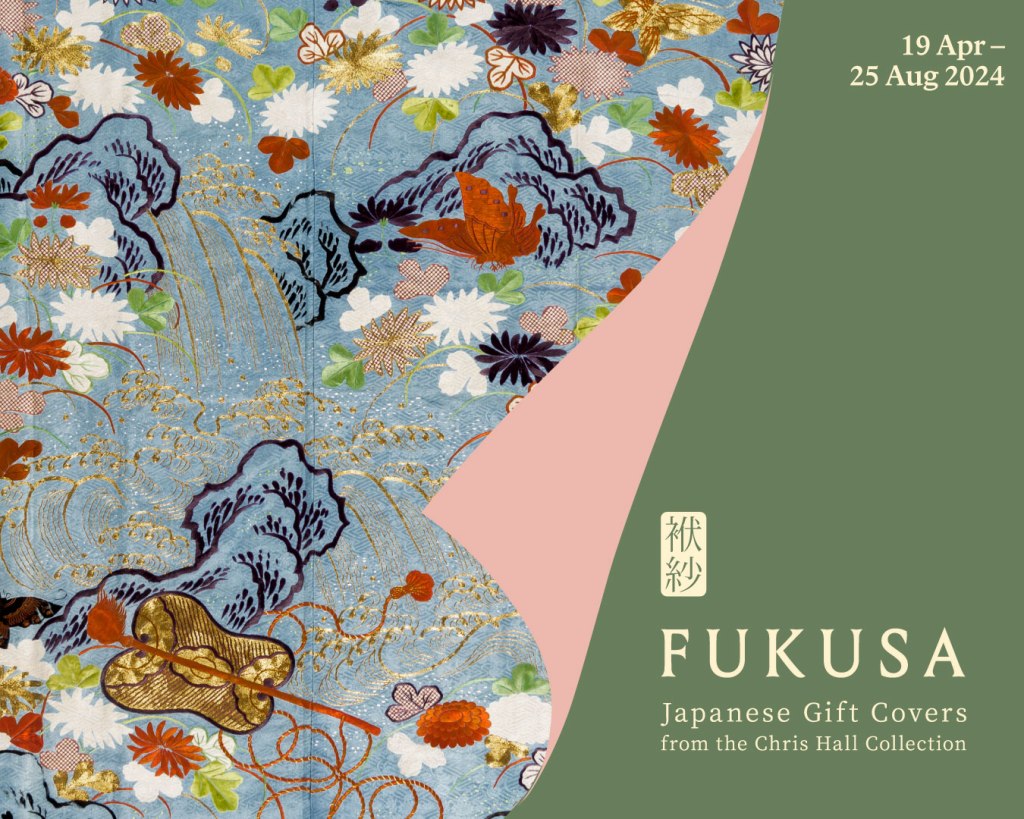
Spotlighting cross-cultural connections in Asia, Singapore’s Asian Civilisations Museum (ACM) and Peranakan Museum presents Fukusa: Japanese Gift Covers from the Chris Hall Collection. Opening to the public this Friday, 19 April 2024, the exhibition presents over 80 fukusa, kimonos and related textiles across five sections at the Special Exhibition Gallery in Peranakan Museum. The exhibition explores the act of gifting – a deeply ingrained practice taking many forms across histories and cultures – through Japanese silk gift covers called fukusa, which were used to present formal gifts from the 18th to early 20th century.
Through a display of exquisite examples of Japanese textile artistry, the exhibition will showcase themes of craft; trade and exchange; and the act of gifting across cultures, including the present day. The exhibition also celebrates a major gift from renowned collector Chris Hall, who has one of the most important private collections of Asian textiles in the world.
Fukusa: Japanese Gift Covers from the Chris Hall Collection will also be complemented by a Weekend Festival with workshops, demonstrations, and drop-in activities, on top of monthly curator-led tours and engagement sessions with local craft practitioners. Visitors can also keep a lookout for a digital interactive station located within the Special Exhibition Gallery where they can customise their own fukusa, as well as explore the act of gifting through tactile activations at the Exploration Zone on Level 3 of Peranakan Museum.
UNCOVER THE ART OF GIFT-GIVING
through fukusa and kimonos from the Chris Hall collection
Spotlighting cross-cultural connections in Asia, Singapore’s Asian Civilisations Museum (ACM) and Peranakan Museum presents Fukusa: Japanese Gift Covers from the Chris Hall Collection, opening to the public this Friday, 19 April 2024. The first special exhibition at the refreshed Peranakan Museum since its re-opening in February 2023, it explores the act of gifting – a deeply ingrained practice taking many forms across histories and cultures – through Japanese silk gift covers called fukusa, which were used to present formal gifts from the 18th to early 20th century.
The exhibition presents over 80 fukusa, kimonos, and related textiles, and celebrates a major gift from renowned collector Chris Hall, who has one of the most important private collections of Asian textiles in the world. Visitors will discover exquisite examples of Japanese textile artistry explored through the themes of craft, trade and exchange, and the act of gifting across cultures, including in the present day.
Kennie Ting, Director of ACM and Peranakan Museum, shares, “Fukusa: Japanese Gift Covers from the Chris Hall Collection is our first special exhibition at the new Peranakan Museum, which re-opened last year. This is a nod to the building’s heritage – the ACM first opened in the former Tao Nan School in 1997, before moving to Empress Place in 2003. When Peranakan Museum first opened in 2008, it also played host to ACM exhibitions not necessarily Peranakan in nature. Our intent moving forward is for Peranakan Museum to host intimate, jewel-like, genre-specific exhibitions of Asian art and heritage, alongside Peranakan-themed special exhibitions. This exhibition honours Chris Hall’s incredibly generous gift of almost 100 pieces of Japanese textiles to the ACM. The gift and exhibition marks the continuation of a longstanding relationship with Mr Hall, from the time when ACM was housed in the Tao Nan School building. We invite the public to take in this incredible display of Asian craftsmanship and to appreciate a collector’s eye for exceptional beauty.”
Japanese gift covers and the art of gifting
Visitors will be introduced to fukusa and how they were used in gift exchanges. The custom of covering gifts with fukusa emerged in the Edo period (1603–1868) and was initially used in ceremonies by the ruling warrior class (samurai) and nobility. By the early 19th century, well-to-do merchants and other wealthier members of Japanese society had also adopted this practice, and it continued well into the 20th century.
As with fashion, fukusa asserted the taste, wealth, and identity of their owners, and sometimes mirrored designs from stylish garments. The second section of the exhibition charts the similarities between fukusa and fashion through designs, materials, and techniques, and examines how the politics of dress intersected with fukusa design in the late Edo period.
Fukusa can be likened to modern greeting cards. They are adorned with designs appropriate for a wide variety of occasions, from annual seasonal festivities to important personal milestones. The third section of the exhibition unpacks the different sentiments conveyed through fukusa. They feature a variety of auspicious symbolic motifs and pictorial allusions, such as lobsters, origami butterflies, cranes, and turtles.
Fukusa also played an important role in establishing cultural literacy. A gift was only considered successful when the recipient understood the meaning behind the fukusa design. As such, the techniques and designs employed to convey messages reflected the creative ingenuity of both maker and patron. The ability to decode these messages was a statement of taste, sophistication, and cultural sensitivity.
Japan on the world stage
In the mid-19th century, Japan’s ports were opened to trade with the West. Rapid industrialisation and modernisation became a national priority. The fourth section of the exhibition charts how fukusa were transformed from luxury items largely unknown outside Japan to a popular commodity, fuelled by the Western fascination with Japonisme. This section explores the impact of fukusa on Western art and global perceptions of Japan.
Visitors will also discover how local merchants and craftsmen responded to this new demand by creating new fukusa for export. Initiatives to industrialise Japan introduced new ideas and technologies from the West, which revolutionised textile production and changed the ways fukusa were made.
The universal language of gift-giving
Across many cultures, especially before modern technology, fine fabric was extremely precious. Wrapping, covering, or accessorising a gift with valuable cloth was both practical and luxurious. The final section of the exhibition discusses the use of textiles in the gifting customs of other cultures, with a special focus on those used in Peranakan traditions. It invites visitors to reflect on shared artistic and cultural heritage between Japan and the rest of Asia. The textiles on display include tray covers used in the exchange of wedding gifts and vibrant cloths used by Chinese Peranakans to decorate the front of altars, where offerings to ancestors and deities are made during religious ceremonies, birthdays, and weddings.
In conjunction with the exhibition, there will be a Weekend Festival with workshops, demonstrations, and drop-in activities, as well as monthly curator-led tours and engagement events with local craft practitioners. Visitors can use a digital interactive on Level 2 to customise their own fukusa, imparting it with special significance. They can also visit the Exploration Zone on Level 3 to explore the act of gifting through tactile experiences.
Fukusa: Japanese Gift Covers from the Chris Hall Collection runs from 19 April to 25 August 2024 at the Special Exhibition Gallery at Peranakan Museum, admission charges apply. For more information, please visit https://www.nhb.gov.sg/peranakanmuseum/.
Follow us @peranakanmuseum | https://www.facebook.com/PeranakanMuseumSingapore
For additional details, please refer to:
- Annex A: About Fukusa: Japanese Gift Covers from the Chris Hall Collection
- Annex B: Exhibition highlights
- Annex C: Exhibition programmes and activities

 The Insightful Media
Leave a comment